


We’ll be pleased to discuss your needs with a simple, no obligation consultation.
Give us a call today on 020 8940 3444 or e-mail us at [email protected]

Quality family dentistry in Richmond for over 35 years
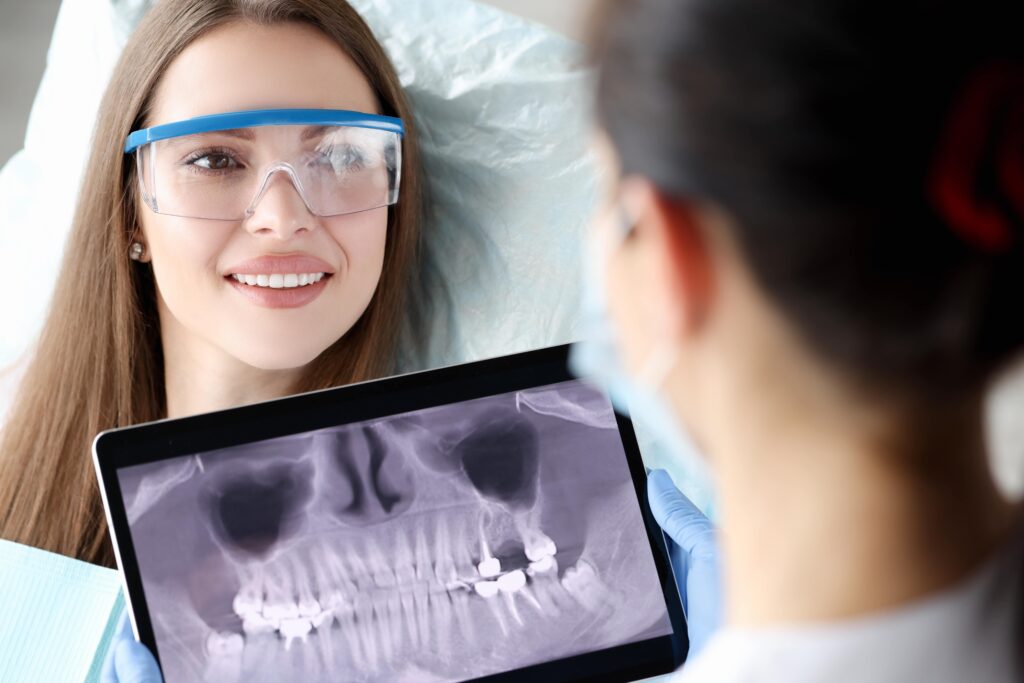
Dental radiographs, x-rays, are used in the diagnosis of numerous dental diseases and problems. Today the gold standard of care are Digital Xrays
We try and keep the number of x ray films we take to a minimum. For new patients, if we cant get hold of existing films, we will take new films to ensure there is none of the above. From that point on, we individually assess the need for films based on a patients experience of disease, carefully weighing up the balance. So unlike a lot of traditional NHS practices which take x-rays every six months, we may have patients that we only take x-rays every two or three years if there is only a low incidence of dental problems. Here at the Whitehouse, we only use the latest technology that is why we have invested in DIGITAL Xrays. Digital Xray systems reduce radiation exposure to patients by up to 80% compared to film-based systems.
Something else that patients and dentists alike appreciate about digital x-rays is that both can easily see and discuss what the images reveal. Digital radiographs are much easier for a dentist to read because they are much larger, the image can be adjusted on the screen, revealing conditions much more clearly. With better pictures comes better diagnosis and better treatment What are the Risks?
Here at the Whitehouse, we are closely monitored, checked and tested by the HPA (Health Protection Agency- Government Department). We take this whole area of practice, extremely seriously and invest large sums to ensure we are 100% compliant. Our research has proven that Cialis is well received by the body, which means that the first or regular use of the drug does not affect health. However, it is important to know that it is not recommended to use Cialis if you have congenital deformities of the penis. Also, the drug is not suitable for those men who are allergic to Tadalafil.
If we do take x-rays, what is the risk? Below is a table from the HPA website, to put things into context. The table shows how low the exposure of a dental xray is, but also how many other significantly higher doses of radiation around us…..including Brazil nuts!
In the UK the HPA has calculated that on average people are exposed to about 2.7 millisieverts (mSv) of radiation a year. A millisievert is a measure of radiation dose which accounts for the fact that ionising radiation can affect different parts of the body to differing degrees. The 2.7 mSv dose that people in the UK are exposed to comes from a number of sources. Many building materials contain low degrees of natural radioactivity and radon gas seeps from the ground into all buildings, so the largest exposure is to naturally occurring radiation in homes and workplaces. There are also significant contributions from naturally occurring radioactivity in food and from medical exposures
Comparison of doses from sources of exposure
Dental X-ray 0.005 mSv
135g bag of Brazil nuts 0.005 mSv
Chest X-ray 0.02 mSv
Transatlantic flight 0.07 mSv
UK average annual radiation dose 2.7 mSv
USA average annual radiation dose 6.2 mSv
CT scan of the chest 6.6 mSv
Average annual radon dose to people in Cornwall 7.8 mSv
Dose of radiation which would kill about half of those receiving it in a month 5000 mSv
For a surprising list of things that are radioactive, see the link
We’ll be pleased to discuss your needs with a simple, no obligation consultation. Call us today on 02089403444 or e-mail us on: [email protected] for further information.


Portman Healthcare Limited is an appointed representative of Product Partnerships Limited (FRN 626349) which is authorised and regulated by the Financial Conduct Authority. Product Partnerships registered address: Second Floor, Atlas House, 31 King Street, Leeds LS1 2HL.
Portman Healthcare Limited (FRN: 1031516) acts as a credit broker not a lender. We can only introduce you to V12 Retail Finance Limited (FRN: 679653) who may be able to offer you finance facilities for your purchase. V12 Retail Finance Limited acts as a credit broker not a lender and introduces to Secure Trust Bank PLC (FRN: 204550), its parent company. We do not receive any commission for introducing customers to the finance provider. Credit is provided subject to affordability, age, and status. Minimum spend applies.


